
Sources for West Falls Church Previous Residents
Previous residents research starts with the era of the address. Fairfax land records can follow an ownership transfer far earlier than a printed directory, while a criss-cross volume can provide a dated address-to-household snapshot. Tax books, Census records, permit files, aerials, vital records, newspapers, and probate each add a different layer. Keep an ownership chain separate from evidence of occupancy, because a deed party and a directory household can be different people.
| Historical source | Period available | Custodian or access point | Address evidence |
|---|---|---|---|
| Fairfax deed records | 1742-present; online index data 1980-present | Circuit Court, CPAN, Historic Records Center | Grantor, grantee, legal description, instrument, plats, and liens |
| HRC real-estate tax books | 1851-1980 | Historic Records Center | Annual owner clues and land or improvement changes |
| Hill's Falls Church criss-cross | 1957-1975, selected editions | Virginia Room | Dated address-to-occupant or business entries |
| Community directories | 1978-1987, 1989, 1990-92; area books through 2003 | Virginia Room | Community, telephone, and address snapshots |
| Fairfax aerial imagery | 1937-present | Jade Historical Imagery Viewer | Development and road context, not names |
For a recent deed, start with the parcel record and recording reference. For a mid-century household, start with the closest reverse directory. For an older tract, begin with the legal description and the Historic Records Center. The Census is public under the 72-year release rule, so it is a date-specific household source rather than a current list.
West Falls Church Address Clues That Last
A street line can change, but a parcel PIN and legal description often preserve the bridge between modern and older records. Fairfax iCare distinguishes a situs address, the physical parcel location, from a mailing address used for tax correspondence. The research sample at 7393 Route 29, for example, pairs a Falls Church situs with an out-of-state corporate mailing address. That difference is normal in property records and does not identify a resident.
Some West Falls Station planning parcels have PINs but no assigned street address. If an old number fails, compare subdivision names, plat references, tax-map material, historic aerials, and the deed description rather than forcing an old label into a current search. This makes the past-residents trail more reliable where West Falls Church, Falls Church City, postal labels, and Fairfax County boundaries overlap.
West Falls Church Previous Residents Deed Chain
Deeds answer who transferred an interest, not automatically who lived at the house. The Fairfax iCare Property Search can supply the current parcel identity, owner name, deed reference, and legal description. The Fairfax Circuit Court Land Records Division holds deeds from 1742 to the present. CPAN offers paid remote access, while the public research room, Historic Records Center, and copy process are the offline routes.
- Find the current PIN, situs, owner, and deed reference in iCare. Record the legal description as well as the street address.
- Locate the current owner's purchase deed by instrument or book and page. The seller on that deed is the grantor.
- Search the seller as a grantee to locate that person's earlier purchase deed for the same legal description.
- Repeat backward, checking the lot, plat, subdivision, boundary language, or parcel before accepting each link.
- Move to index-book images, deed books, or the Historic Records Center when the online path no longer reaches the needed era.
- Grantor
- The person or entity transferring an interest in a deed.
- Grantee
- The person or entity receiving that interest. A prior grantor can often be searched as an earlier grantee.
- Chain of title
- The documented sequence of transfers for the same property, tested by its legal description rather than a street line alone.
- Legal description
- The lot, tract, subdivision, or boundary language in a deed that identifies land even if the address changes.
Certified copies cost $2 per document plus $0.50 per page through the Circuit Court process. Staff can explain how to use the records but do not perform a complete property search. Bring the PIN, a name, or the book and page whenever possible.
West Falls Church Previous Residents Access Paths
The land-record route has several access levels. CPAN supports subscribed remote access to record sets, with an application fee of $150 per user and $150 per user each quarter. Index data reaches 1980 to the present, index-book images span 1742-1979, and document-image coverage is record-specific. A paid screen is not the only path.
At 4110 Chain Bridge Road, Suite 317, the Circuit Court land-record research room has public terminals on weekdays from 8 to 4:30. The Historic Records Center at the same courthouse address has pre-1945 deed books and historical tax material, is open 8 to 4 on weekdays, and recommends appointments. Call HRC at 703-246-4168 or email CCRHistoricRecords@fairfaxcounty.gov to confirm holdings before travel. The land-record copy process also has in-person and mail routes when the instrument or book-and-page reference is known.
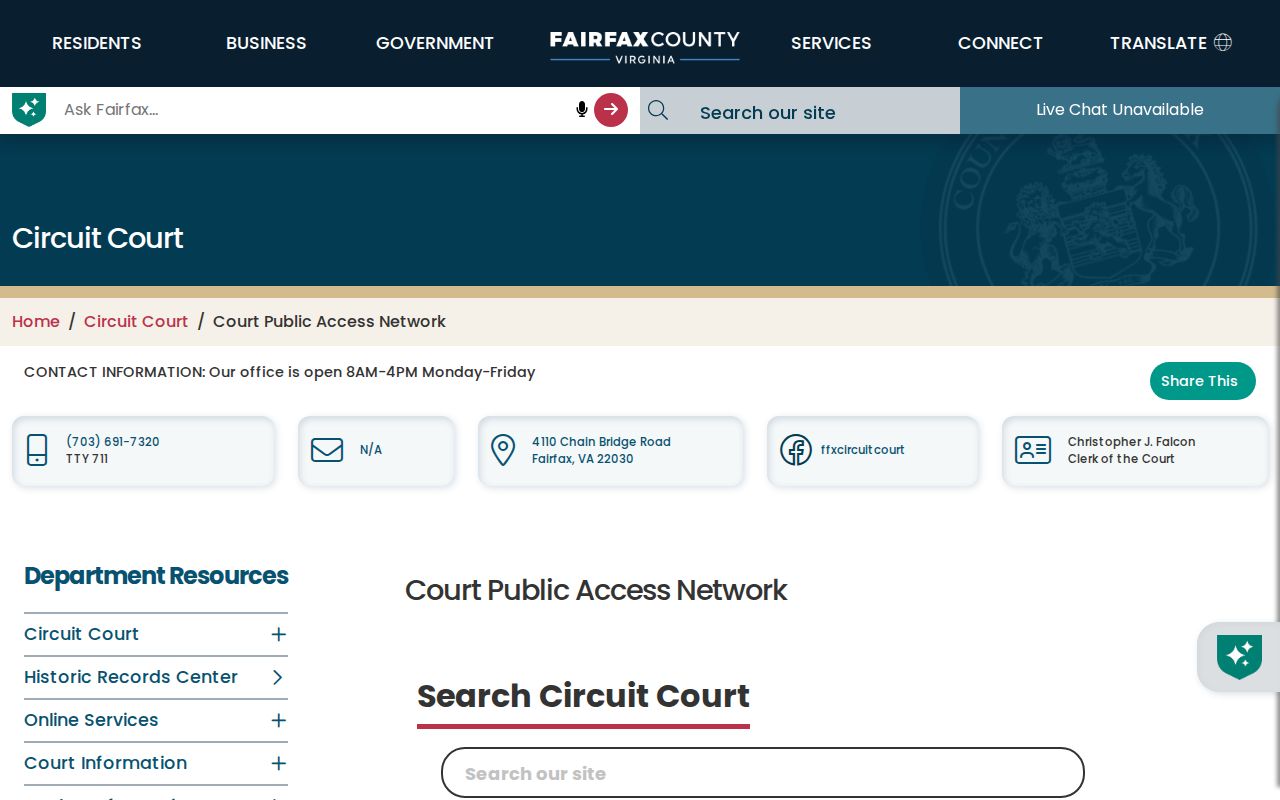
The CPAN access page is shown below. It explains the subscription route; the courthouse and archive remain the practical alternatives for books, older material, and questions that need a specific volume.
For a nonportal administrative record, a Virginia FOIA request should specify the exact address or PIN, record category, agency, and date range. Court records have their own clerk route and are not handled through county FOIA.
West Falls Church Previous Residents in Directories
Ownership is only one part of who lived here before. Hill's Falls Church criss-cross editions for 1957, 1959, 1961, 1963, 1965, 1967, 1969, and 1971 through 1975 place printed occupants or businesses under an address for the edition date. Community directories extend unevenly from 1978 through the early 2000s across Falls Church, Baileys Crossroads, Lake Barcroft, Pimmit, and Seven Corners.
The volumes, their publishers, and their physical shelf locations are detailed in the West Falls Church city directory collections. Here, use the relevant edition as one timestamp in an address chronology. Record whether the volume is reverse-ordered, telephone-based, or community-wide, because scope controls what a blank line or a name change can mean.
- Start with the directory edition closest to the purchase, move, construction, or family event being researched.
- Copy the address exactly and note the household, business, phone, or owner-renter notation only if that edition prints it.
- Compare the nearest earlier and later editions, preserving gaps instead of assuming annual coverage.
- Pair the directory snapshot with the available federal Census date, keeping the Census geography and release date in the record notes.
- Test a change with a deed, tax book, obituary, probate item, newspaper notice, or permit date.
Telephone and reverse directories can include renters or business users that do not appear in a deed. They still do not prove continuous residence between issues or identify every household member.
West Falls Church Previous Residents Record Gaps
Fairfax County was formed in 1742, but historical silence needs care. The Library of Virginia reports that original wills, deeds, and loose papers were destroyed during the Civil War. Many Fairfax deed books from 1763 through 1819 and numerous prewar minute books are missing. A negative index result in that period does not prove a person, property, or transfer never existed.
Search around the gap. Pre-1945 material may be at the Historic Records Center, while the Virginia Room, Library of Virginia, newspapers, tax books, plats, and surviving court material can supply adjacent clues. Use the earliest and latest confirmed dates to describe the evidence honestly instead of converting a missing book into an exact ending date for past residents.
Note: Civil War losses and uneven directory runs make a negative historical search inconclusive, especially for an older West Falls Church address.
West Falls Church Past Residents and House History
A house can have a visible record trail before it has a named household trail. Fairfax's historic property research guidelines point researchers to land tax books, maps, historic-property files, and a sequence for estimating when improvements appeared. Those records explain the parcel or structure. They do not, by themselves, identify an occupant.
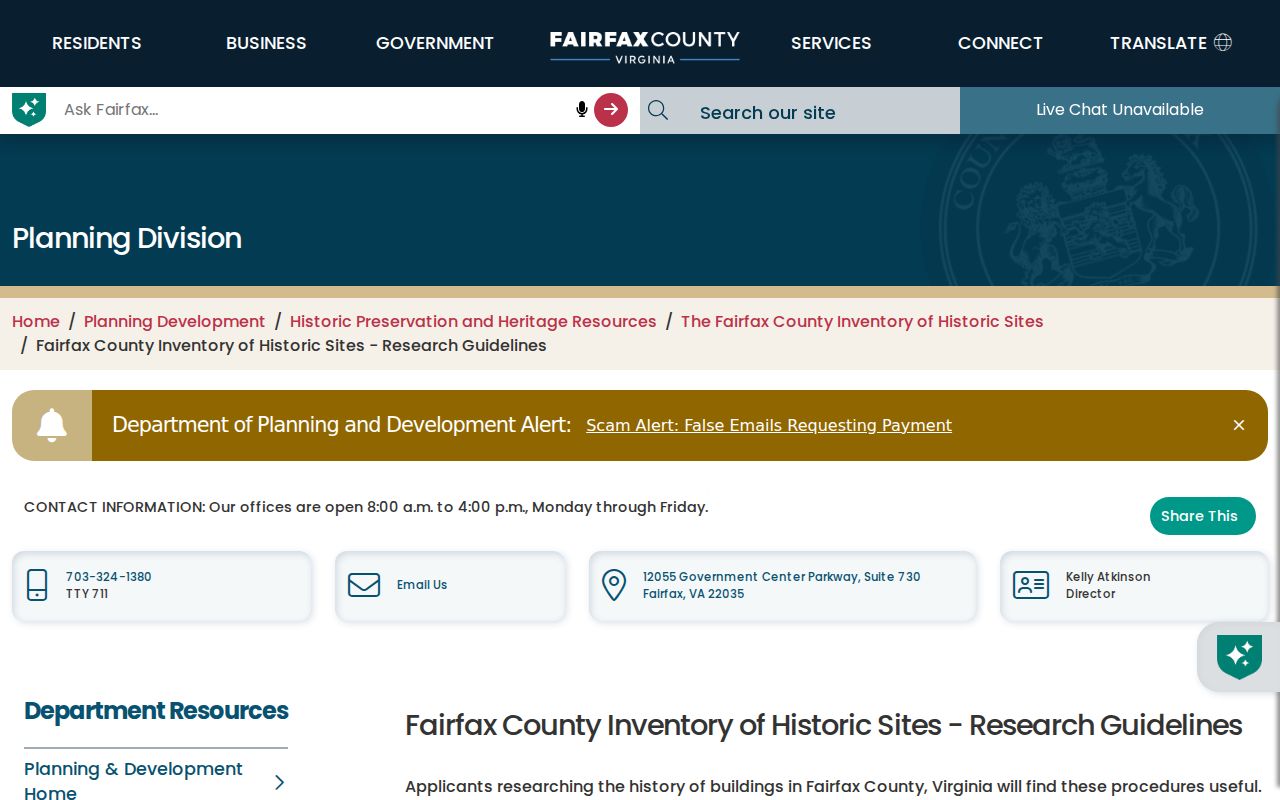
The official guide is pictured below. Use it after the PIN and legal description are known, then compare tax changes, maps, and property files with the deed sequence. The Virginia Room supplies maps, directories, microform, newspapers, and licensed databases, while HRC staff can explain which historical books survive.
Fairfax aerial imagery reaches back to 1937, and 2025 imagery is now available in the Historical Imagery Viewer. Aerials date development, demolition, road context, or parcel change, but show no named former residents. Sanborn coverage for a particular West Falls Church address must be verified before relying on a sheet or year.
West Falls Church Previous Residents Trail Endpoints
Newspapers, obituaries, and probate can close or redirect an older address trail. The Virginia Room holds local newspapers and historical newspaper databases. The Library of Virginia newspaper directory can identify titles and holding institutions, and Fairfax Connection is listed weekly from 1986 to the present. Use a date and a repository citation for every notice.
Probate and obituaries may point to heirs, a death date, fiduciaries, or a later deed. They do not replace a certified vital record, and a reported residence should be distinguished from legal ownership. Virginia Department of Health records have access rules: birth records become public after 100 years, while death, marriage, and divorce records become public after 25 years. Restricted records require the eligibility or authority described in Va. Code §32.1-271.
West Falls Church Previous Residents Use Limits
Historical address research is useful for family history, house history, estate questions, and understanding a neighborhood's record trail. It is not a way to locate or pursue a living person. Current owner listings, historical phone books, voter information, vital records, and court material each have their own access limits, and protected addresses may be withheld or substituted.
Virginia's Address Confidentiality Program provides eligible survivors a substitute mailing address and protects the actual address. Its protections are not retroactive or universal across private and federal systems. Voter lists are controlled, and eligible recipients may not republish list data on the internet in searchable form. These limits remain important even where older printed directories are open for historical research.